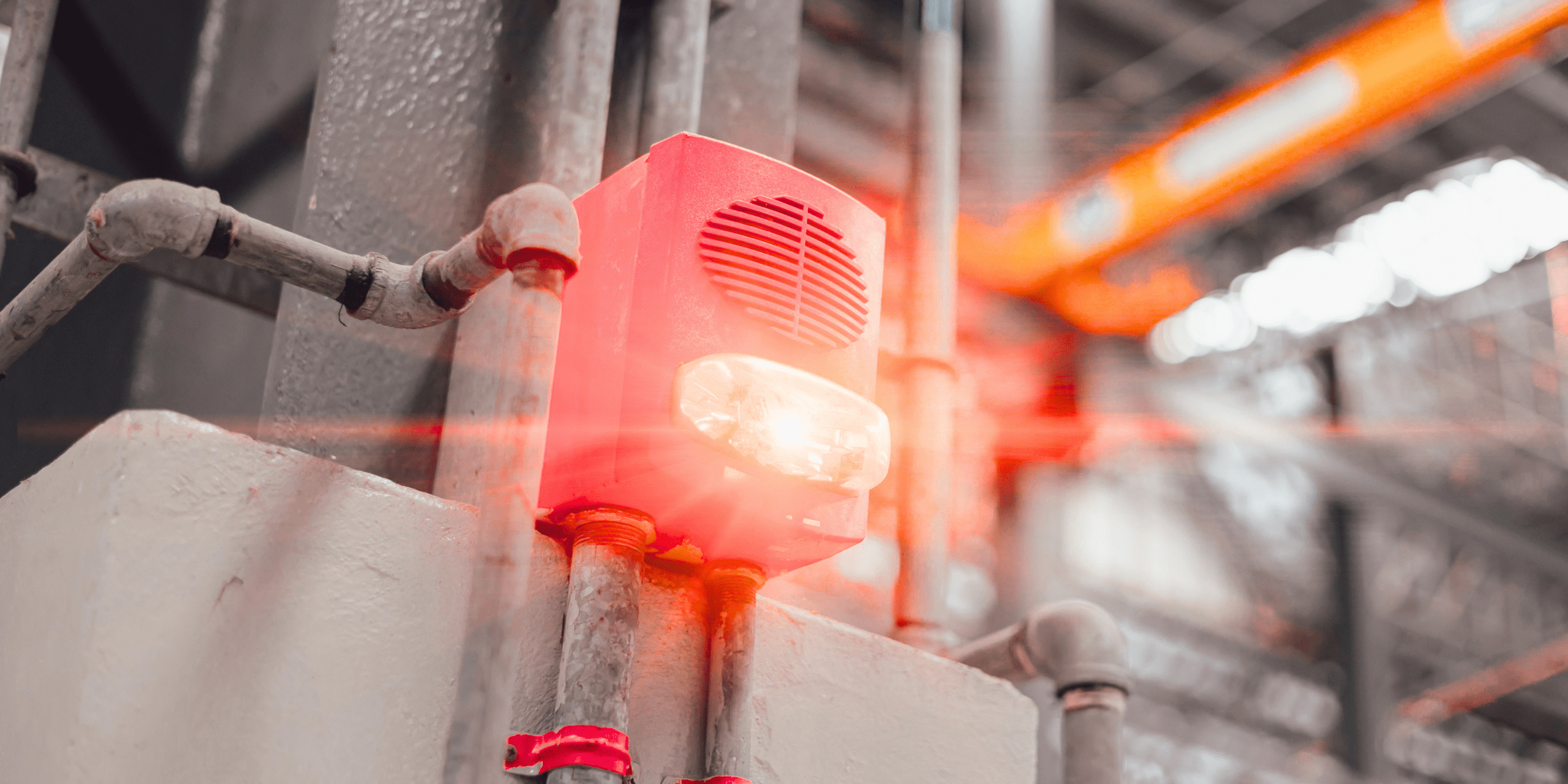
When people think about fire safety, one of the first things that comes to mind is the familiar sound of an alarm bell. For decades, alarm systems have played a vital role in alerting building occupants to an emergency. But in today’s increasingly complex buildings and fast-paced environments, is simply sounding an alarm enough?
The short answer is not always.
An alarm can tell people that something is wrong. It cannot necessarily tell them what is happening, where the danger is, or what they should do next.
As South Africa continues to develop modern commercial buildings, hospitals, shopping centres, schools, industrial facilities and mixed-use developments, the need for clear, intelligible emergency communication is becoming increasingly important. Voice evacuation systems provide a way to move beyond simply raising the alarm, helping occupants understand the situation and respond with clear, timely instructions when every second matters.
The Reality of Emergencies
During an emergency, every second counts. Modern fire detection systems are highly effective at identifying and signalling a potential threat. But detecting an emergency is only the first step. The next challenge is communicating clearly with the people who need to respond.
Occupants need to understand what is happening, where the danger may be, and what action they should take.
A ringing bell tells occupants that something is wrong. A voice evacuation system can provide clear, intelligible instructions to help them understand what to do next.
That difference can make all the difference when every second matters.
When an Alarm Bell Isn’t Enough
Traditional alarm bells play an important role in fire safety: they alert occupants that an emergency may be taking place and create an immediate sense of urgency. But an alarm tone alone provides very little information about what happens next.
In a complex building, occupants may still need to know:
- Is the emergency on my floor or elsewhere in the building?
- Do I need to evacuate immediately?
- Which evacuation route should I use?
- Are there areas or routes I should avoid?
- What instructions should I follow?
Without clear information, occupants have to interpret the situation for themselves. In a large or unfamiliar building, that can create uncertainty and make an orderly evacuation more difficult.
An alarm creates awareness. Clear instructions provide direction.
That is where voice evacuation systems add another layer of protection, providing occupants with timely, intelligible information to help them respond appropriately.
The Advantages of Voice Evacuation Systems
Voice evacuation systems add something a conventional alarm tone cannot: clear, intelligible information.
Instead of simply alerting occupants that an emergency may be taking place, the system can deliver calm, pre-recorded or live messages that provide relevant instructions, such as:
“Attention please. A fire has been detected on Level 3. Please proceed calmly to the nearest emergency exit. Do not use the elevators.”
A message like this can immediately provide occupants with context and direction, helping them understand what is happening, where action may be required, and what they should do next.
This becomes particularly valuable in large or complex buildings, where occupants may be unfamiliar with the layout or where different areas may require different instructions.
Voice evacuation systems can also provide:
- Clear, intelligible announcements that are easy to understand in an emergency
- Zoned messaging, allowing different areas to receive different instructions
- Live emergency announcements from authorised personnel
- Pre-recorded messages for consistent and rapid communication
- Integration with fire detection and other building systems to support a coordinated emergency response
The objective is simple: move beyond simply sounding the alarm to communicating what people need to know.
Ideal for Large and Complex Buildings
As buildings become larger, more connected and more complex, so do their evacuation requirements.
Shopping centres, airports, hospitals, universities, data centres, office towers, warehouses and manufacturing facilities can each present different challenges, from large numbers of occupants and unfamiliar visitors to multiple floors, zones and operational areas.
A modern voice evacuation system can help address these challenges by providing:
- Zoned messaging so that different areas can receive relevant instructions.
- Phased or targeted evacuation, supporting the building’s planned emergency response strategy.
- Live announcements from authorised emergency personnel when immediate or situation-specific instructions are required.
- Integration with fire detection and other building systems, helping coordinate emergency communication across the facility.
This level of flexibility and control goes beyond what a conventional alarm tone can provide. Instead of delivering the same signal to everyone, a voice evacuation system can deliver the right information to the right people at the right time.
Compliance and Best Practice for Evacuation Systems
Fire safety in South Africa is governed by a combination of national building regulations, applicable standards, building classification and the specific requirements of each facility.
Standards such as SANS 10139, which addresses the design, installation and servicing of fire detection and alarm systems, form an important part of this framework. The SANS 7240 series also includes standards relevant to fire detection and alarm systems, including sound system control and indicating equipment used in voice evacuation applications.
Whether a voice evacuation system is required will depend on factors such as the building’s occupancy, size, risk profile, design and applicable requirements. For complex or high-occupancy environments, voice evacuation can form an important part of a broader emergency communication and evacuation strategy.
But compliance is only one part of the equation.
Organisations also have a responsibility to consider how effectively they can communicate with employees, visitors, customers and contractors when an emergency occurs. Clear, intelligible emergency communication can support a more coordinated response and help people understand what action they need to take.
The goal should not simply be to meet the minimum requirement. It should be to provide an emergency communication system that people can rely on when it matters most.
A System Is Only as Good as Its Maintenance
Installing a state-of-the-art voice evacuation system is only the beginning. Like any life safety system, its reliability depends on regular inspection, testing and maintenance.
An evacuation system that has not been properly maintained may fail when it is needed most. Faulty loudspeakers, damaged wiring, depleted backup batteries, configuration issues or failed amplifiers can all compromise the system’s ability to deliver clear, intelligible instructions during an emergency.
Routine maintenance helps ensure that:
- Every speaker and notification device operates as designed.
- Backup power supplies are tested and ready.
- Integration with fire detection and other building systems remains fully functional.
- System faults are identified and corrected before they become critical.
- The installation continues to meet applicable standards and maintenance requirements.
Regular servicing not only protects your investment but, more importantly, helps ensure that the people who rely on the system can trust it to perform when it matters most.
Why Choosing the Right System Integrator Matters
A voice evacuation system is far more than a collection of speakers and amplifiers. Its effectiveness depends on how well the system is designed, integrated, commissioned and maintained.
The right system integrator will consider the building’s layout, occupancy, risk profile and operational requirements before selecting and configuring the technology. This ensures the system is designed to support the building’s emergency communication and evacuation strategy, not simply to meet a specification.
A properly engineered solution requires:
- Careful system design based on the building and its specific requirements.
- Appropriate product selection to achieve clear, intelligible communication.
- Seamless integration with fire detection and other relevant building systems.
- Thorough installation and commissioning to verify that the system performs as intended.
- Training and ongoing technical support to ensure the system remains effective throughout its lifecycle.
This is the approach Audionote brings to voice evacuation and life safety projects across South Africa.
With decades of experience in professional audio, public address, voice evacuation and integrated communication solutions, we provide a complete approach, from system design and product selection through installation, commissioning, training and ongoing maintenance.
Working with internationally recognised manufacturers and applying industry best practices, we engineer solutions designed to deliver clear, intelligible communication when it matters most.
Because when a life safety system is called upon, reliability cannot be an afterthought. Every component, connection, configuration and maintenance intervention contributes to a system that people need to be able to trust.
For organisations, investing in a properly designed and maintained voice evacuation system is ultimately an investment in preparedness, communication and the safety of everyone who occupies the building.
The Future of Life Safety
Modern emergency communication is about far more than sounding an alarm. It is about providing clear information, guiding people towards the appropriate response and supporting emergency personnel as they manage an incident.
As buildings become smarter and more integrated, life safety systems are evolving alongside them. Voice evacuation can form part of a broader, connected approach to emergency communication—bringing together fire detection, zoned messaging, building systems and live emergency announcements.
The future of life safety is not simply about detecting an emergency faster. It is about communicating more effectively when one occurs.
Key Takeaways
So, are evacuation systems in South Africa a necessity or simply a nice-to-have?
The answer depends on the building, its occupancy, risk profile and applicable requirements. But for larger, more complex or high-occupancy facilities, voice evacuation can provide a level of emergency communication that a conventional alarm tone cannot.
The key considerations are:
- Detection is only the first step. Occupants also need clear information about what is happening and what action to take.
- Voice evacuation provides direction. Zoned messaging, pre-recorded instructions and live announcements can support a more coordinated response.
- The system must be engineered for the building. Design, integration and commissioning are critical to ensuring the system performs as intended.
- Reliability depends on maintenance. Regular inspection, testing and servicing help ensure the system remains ready when it is needed.
- The right integration partner matters. Experience, technical expertise and ongoing support are essential throughout the system’s lifecycle.
Ultimately, effective life safety communication is about more than meeting a requirement. It is about ensuring that, when an emergency occurs, people have access to clear, intelligible and reliable information when they need it most.