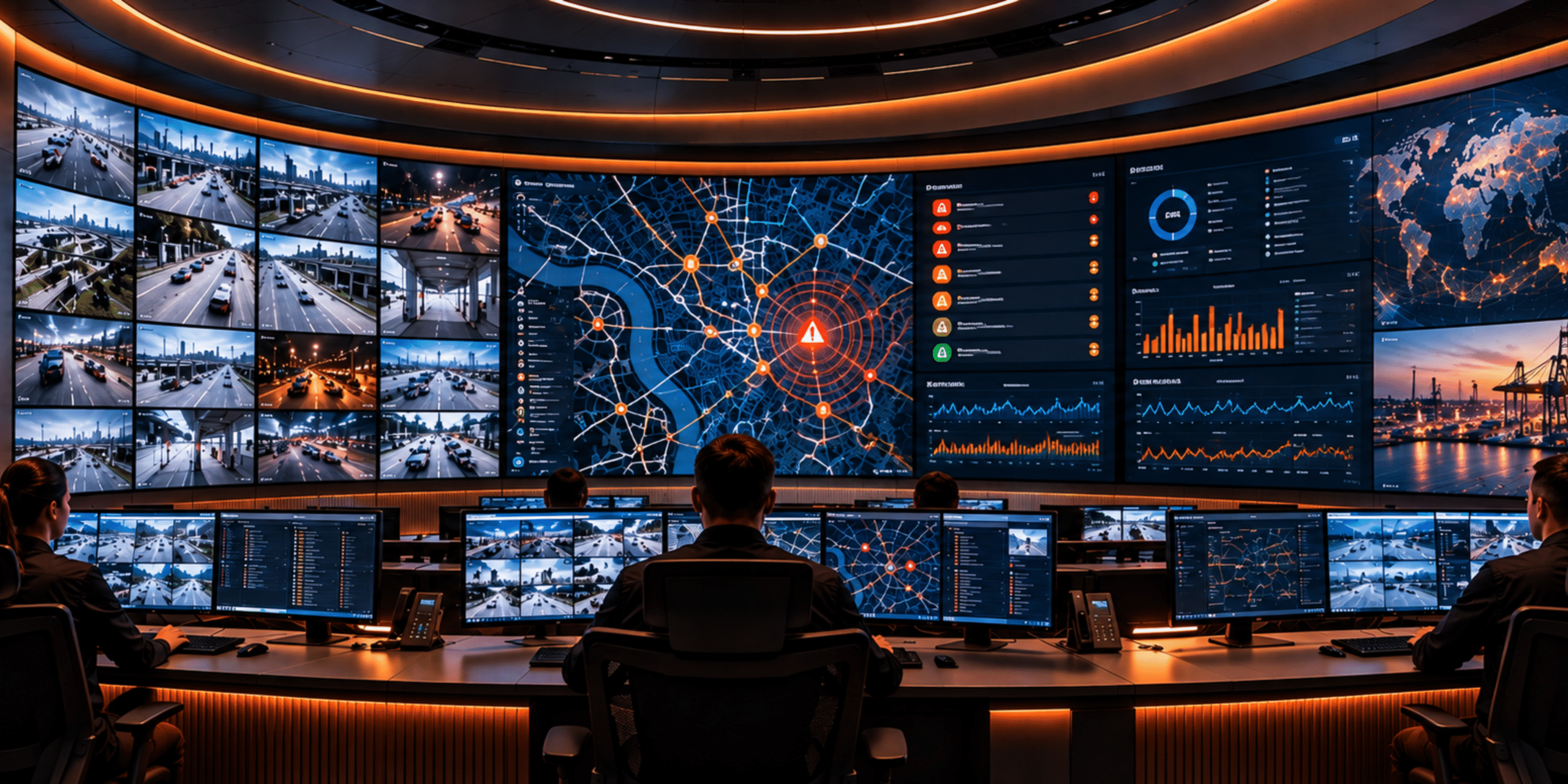
Over the years, control rooms served a specific purpose: monitor operations, identify issues and coordinate a response.
But the environment has changed. Today’s operators are connected to more systems, data sources and real-time information than ever before. Camera feeds, alarms, dashboards, sensors, communications and operational systems can all compete for attention at the same time. The result is an information paradox: technology gives operators greater visibility, but more information does not automatically create better awareness.
When every screen demands attention, critical information can become harder to identify. The challenge is no longer simply how much information a control room can display, but how effectively the control room can be designed for that information can be understood and acted upon.
When Visibility Becomes Overload
Visibility becomes overload when operators are expected to process more information, alerts and interfaces than they can effectively prioritise in the moment. As more cameras, sensors and data sources are added to the mix, the number of screens and information feeds can quickly grow beyond what operators can easily manage.
As control-room technology evolves, LED video walls and more immersive display configurations offer new ways to bring information together in a shared visual environment. However, a larger or more advanced display does not automatically create better situational awareness. Without thoughtful content layout, appropriate viewing distances and effective visualisation, even an impressive display can leave operators struggling to identify what matters most.
What Causes Overload?
- Cognitive Overload: When the mental effort required to process information becomes excessive, an operator’s ability to maintain focus can suffer. Long shifts and continuous monitoring can add to fatigue, potentially affecting alertness and response times.
- Too Many Alarms: When alarms suddenly start to activate, an operator may need to navigate through multiple sources and data streams to determine where the problem lies. The sheer amount of information that they need to process in real time can become overwhelming and reduce vigilance and increase stress levels.
- False Alarms: Alerts that require no action can contribute to alarm fatigue, making it harder for operators to distinguish genuine threats from routine or irrelevant notifications.
- Scattered Data: It is critical to get the right information to the right people at the right time, whether they are located inside the physical control room or at one or more remote locations. When information is spread across disconnected systems, operators may need to search for answers manually, increasing the risk of inconsistencies and delaying responses.
The Cost of Missed Attention
In a control room, the consequences of poor information management can extend well beyond operator frustration. When critical information is difficult to identify or systems are slow to communicate with one another, response times can suffer.
Depending on the environment, this can affect:
- Operator performance: prolonged cognitive and physical demands can affect concentration over extended shifts.rehensive discovery process ensures the technology is designed around the organisation’s needs from the outset, laying the foundation for reliable collaboration and long-term business value.
- Operational continuity: delays can interrupt processes and workflows.
- Response times: operators may spend valuable time locating or verifying information.
- Communication: fragmented systems can make it harder for teams to work from the same information.
- Safety: in critical environments, delayed or missed information can increase operational risk.
Designing for Awareness, not just Display
Building a control room that actually supports situational awareness requires more than a collection of screens. It needs an integrated audio-visual environment designed to present complex information clearly, connect multiple sources and help operators maintain awareness of changing conditions.
From LED video walls and curved display configurations to operator workstations and visualisation systems, every component should serve a purpose. The goal is to create a coherent operational picture rather than a collection of competing inputs.
1. LED video walls: Making Critical Information Visible
LED video walls can create a large, seamless visual canvas for combining camera feeds, dashboards, maps and operational data. Their value lies not simply in their size or resolution, but in how information is organised, scaled and prioritised for the people monitoring it. A well-planned display layout helps operators interpret the information presented without being overwhelmed by competing content.
2. Curved and panoramic displays: Designing for the Field of View
Curved and panoramic display configurations can create a more continuous visual environment, particularly where operators need to monitor multiple sources across a wide viewing area. Their suitability depends on factors such as room dimensions, viewing distances, sightlines and operator positions. The objective is to improve visibility and usability, not simply to create a more impressive display.
3. Visualisation and processing: Bringing Information Together
Video wall processing and visualisation systems allow multiple sources to be arranged into meaningful layouts. Operators can view camera feeds, dashboards and other data together, while relevant information can be brought into focus as situations change. The right configuration helps turn separate information sources into a more coherent operational picture.
4. Operator workstations: Putting Control in Reach
While the video wall provides a shared overview, individual operator workstations provide access to the detail needed to investigate incidents and take action. Multiple monitors and Keyboard, Video and Mouse (KVM) systems can help operators access different computers and sources without requiring a separate keyboard, monitor and mouse for every system. Workstation design should support the operator’s specific responsibilities and workflow.
5. AV integration: Making the Environment Work as One
Displays, processing systems, source devices, audio and operator controls need to work together reliably. Effective AV integration helps ensure that information can be accessed, displayed and communicated where it is needed. Rather than treating each component as a standalone solution, the design should consider how the entire environment will operate, how it can scale as requirements change, and how it will be supported over time.
Other practical considerations to keep in mind:
- Rationalise Alarms: Review alert systems to distinguish actionable, high-priority events from routine notifications. Visual and audible alerts should help operators recognise what requires attention.
- Optimise Ergonomics: Consider appropriate lighting, adjustable workstations, temperature control and viewing distances to support operator comfort during extended shifts.
- Design the audio environment: In a busy control room, alarms, notifications, radio communications and voice messages can compete for attention. A well-designed audio environment should help operators distinguish between routine information and events that require immediate attention. If everything sounds urgent, nothing sounds urgent.
- Apply Human-Machine Interface (HMI) Best Practices: Use consistent layouts, clear visual hierarchies and purposeful colour coding. In suitable operational interfaces, restrained colours can distinguish normal conditions from alerts or anomalies, helping important changes stand out.
- Consider Intelligent Monitoring: Where appropriate, analytics and AI-enabled systems can help identify unusual patterns, prioritise alerts and surface relevant information. These capabilities should complement a well-designed AV environment rather than compensate for poorly integrated systems.
Where AI Fits In
AI has a growing role to play in helping control rooms manage the sheer volume of information available to operators. Rather than replacing human decision-making, AI can act as an additional layer of analysis, helping identify patterns, highlight anomalies, prioritise information and automate routine tasks.
Potential applications include:
- Anomaly detection: identifying unusual activity across video, sensors or operational data.
- Alert prioritisation: helping distinguish higher-priority events from routine notifications.
- Predictive monitoring: identifying patterns that may indicate developing equipment or operational issues.
- Workflow support: assisting with tasks such as incident logging, data summaries or presenting relevant information to operators.
The goal isn’t to remove people from the decision-making process, it’s to give them better information with which to make decisions.
The Future Control Room
The modern control room is no longer a collection of individual systems operating side by side. As operations become more connected, the control room needs to bring information, communication and technology together into a single, coherent environment.
- Connected: LED video walls, operator displays, visualisation systems, audio and communications need to work together with the systems supplying operational information. An integrated AV environment helps operators view relevant sources together, while supporting access to detailed information at individual workstations.
- Intelligent: Visualisation and processing systems can help organise multiple sources into meaningful layouts, while AI-enabled tools may assist with identifying anomalies and prioritising information.
- Human-centred: Display configurations, viewing distances, sightlines, workstation layouts, lighting and acoustics should be designed around the people using the room. Curved or panoramic displays may suit some environments, while other control rooms may benefit more from conventional video walls and carefully positioned operator screens.
The result is not simply a more technologically advanced control room. It is an environment designed to help people see what is happening, understand what matters and respond with confidence.
Key Takeaways
- More data doesn’t automatically mean better situational awareness.
- Control rooms should be designed around the operator, not simply the technology.
- Information needs to be prioritised, integrated and presented in context.
- AI can help filter and interpret information while keeping human judgement at the centre.
- The goal is not to display more. It is to help people understand what matters and respond with confidence.
A control room should give people more than visibility. It should give them clarity.
From LED video walls and visualisation systems to integrated audio and operator workstations, every component should contribute to a connected, purposeful environment designed around the people who use it.
Because in a control room, awareness isn’t about seeing more. It’s about seeing what matters.
Planning a new control room or upgrading an existing environment? Speak to one of our Pre-Sales Engineers about designing an integrated solution around the people who use it.
Book a Complimentary AV Discovery Session
Our specialists will review your meeting spaces and identify opportunities to improve collaboration, reliability, and long-term ROI.